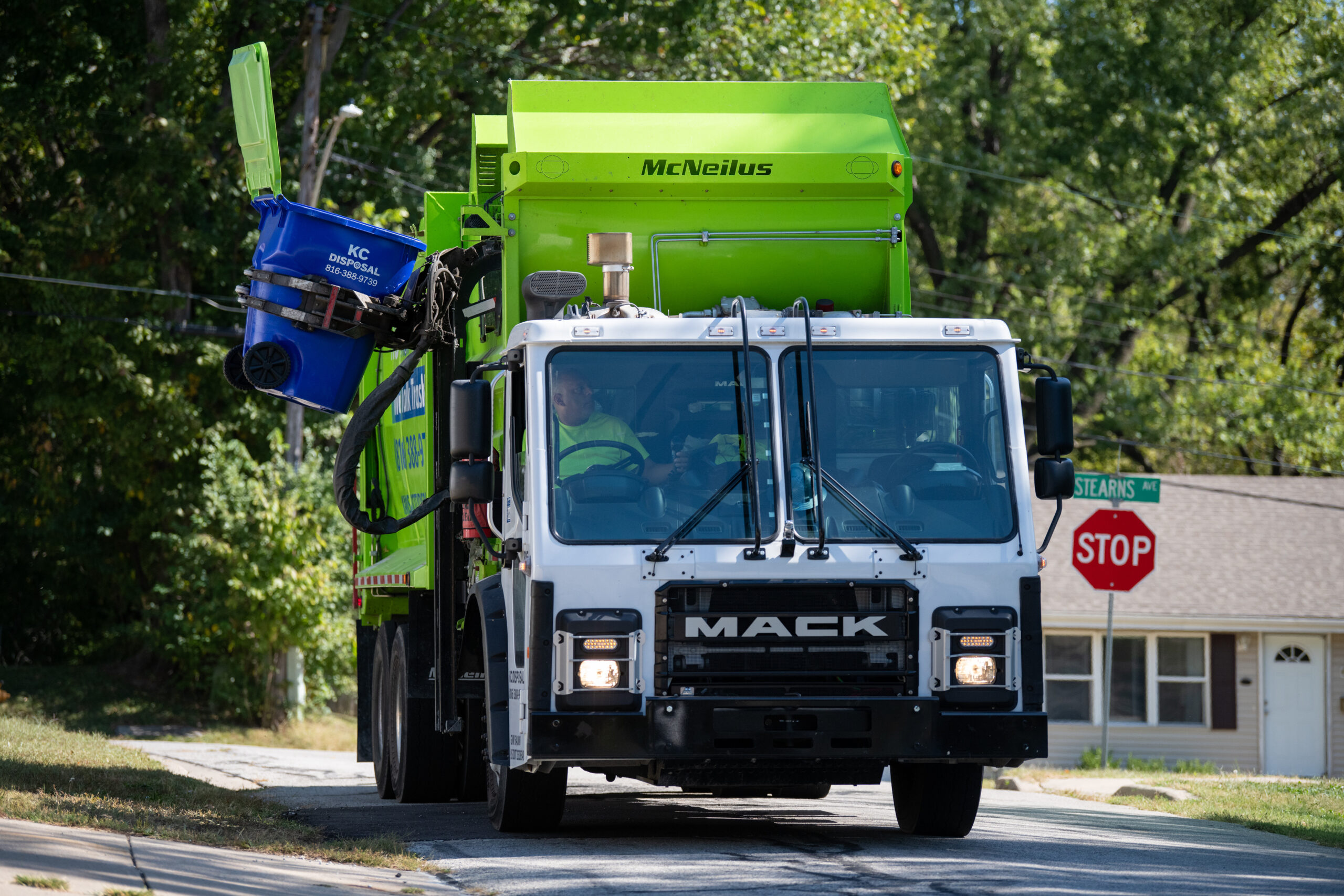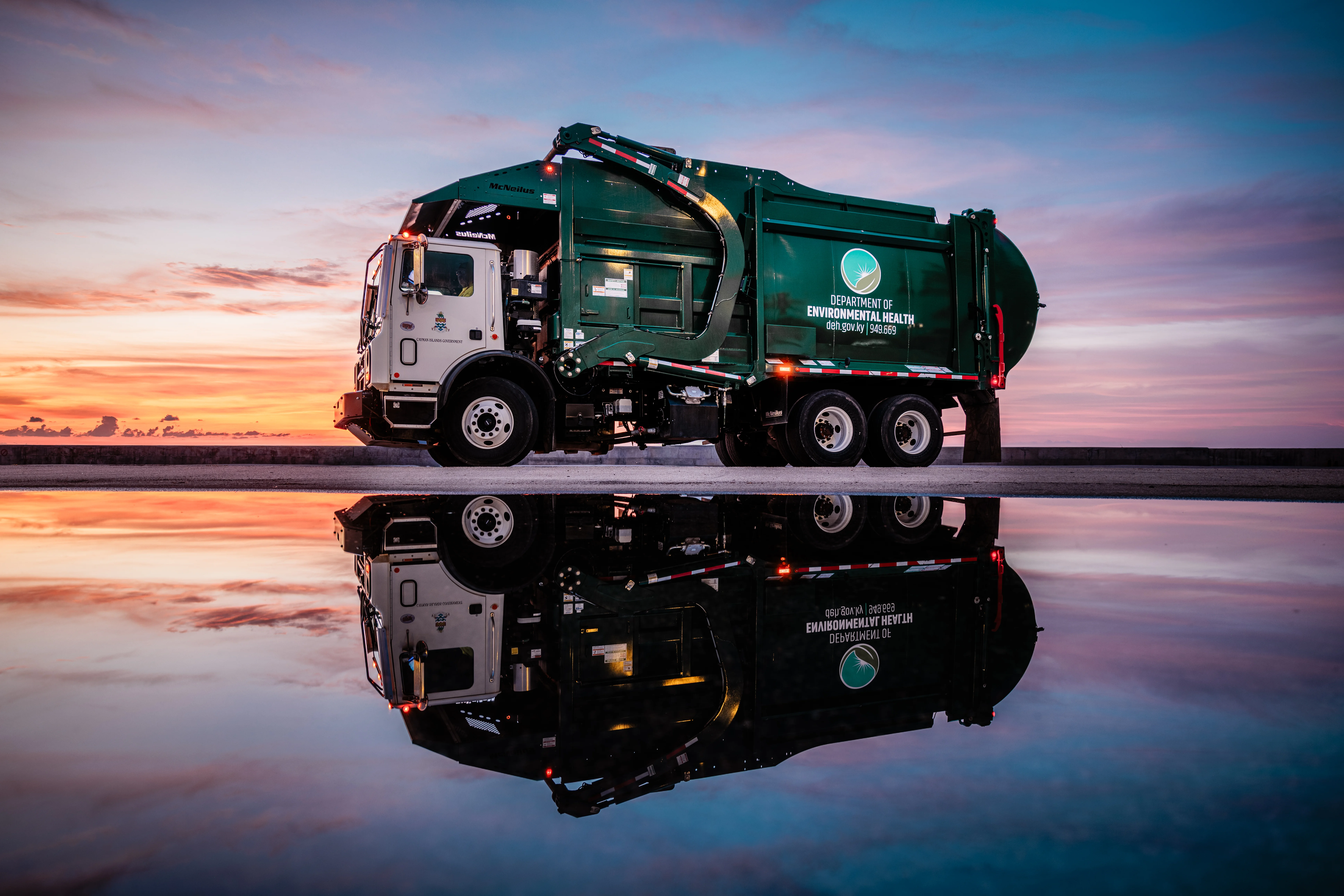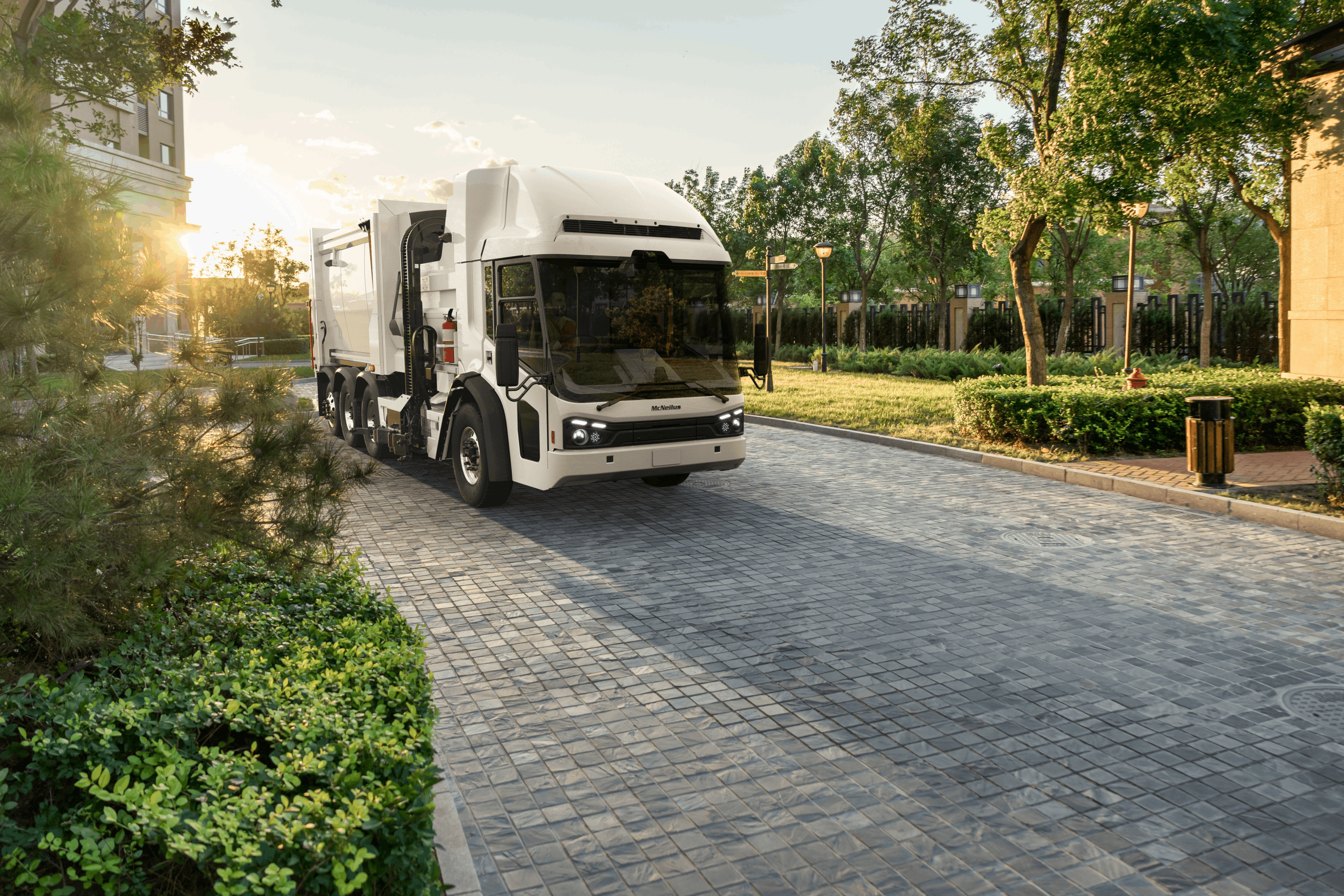
If you manage a refuse fleet, the diesel vs electric conversation is no longer just a conversational topic, but a key component of operations. Determining which one is best for your needs affects route design, maintenance planning, driver performance, capital budgeting, uptime targets, and long-term fleet lifecycle strategy.
For fleet managers evaluating chassis specs, route efficiency, downtime risk, and TCO, the differences between diesel and electric refuse trucks show up in very specific operational ways. It impacts performance on the street, in the shop, and in the budget ledger. In this article, we’ll look at the differences in practical terms instead of marketing language.
Diesel vs Electric Refuse Truck Considerations
Before comparing powertrains, it is important to understand the operational environment where the truck is going to be used. Refuse trucks operate on a daily basis in dense urban or suburban routes with:
- Constant stop-and-go movement
- Frequent hydraulic arm or packer cycles
- Low average speeds
- High idle time
- Predictable daily mileage
Predictability is exactly why electric refuse trucks are being piloted heavily in municipal fleets. For a deeper look at what’s now available, the Volterra platform covers this in detail. Electric trucks tend to perform best in short and medium-haul applications where routes are consistent and range requirements are manageable.
Diesel, on the other hand, has historically dominated refuse fleets as the truck of choice. However, reliability, refueling speed, and established service infrastructure are all undeniable perks.
The result is not a simple “one is better” scenario. It is a trade-off matrix.
Upfront Cost vs Lifecycle Cost
Let’s take a look at the differences between upfront cost and lifecycle cost.
Capital Purchase Price
Let’s start with the most obvious operational difference between the two trucks.
Electric refuse trucks can cost significantly more than diesel trucks. Often they’re nearly double the cost of a diesel garbage truck. Typically they range in price from $700,000–$950,000 range.
Some municipal procurement data has shown electric garbage trucks costing over $200,000 more than diesel models depending on customization and battery size.
Differences include the following
- Replacement cycle timing
- Financing structure
- Capital expenditure approvals
- Grant or incentive reliance
Diesel fleets are still easier to scale quickly because of lower initial capital barriers.
The operational things can change.
Electric refuse trucks typically deliver:
- Lower energy costs
- Lower maintenance costs
- Reduced downtime from mechanical failures
Fuel vs Electricity
Now let’s compare fuel versus electricity in refuse trucks.
Fuel is one of the largest operational expenses in any refuse fleet. For tactics that work on existing diesel fleets, reducing fuel costs in refuse operations covers this in detail. It’s true that diesel trucks burn a substantial amount of fuel due to constant stopping, idling, and hydraulic system loads.
Electric refuse trucks eliminate fuel costs entirely and instead rely on electricity, which is typically cheaper than diesel.
In some heavy-duty fleet comparisons, electric trucks can reduce fuel expenses dramatically, sometimes by up to 85–90% depending on duty cycle and energy pricing.
You’ll enjoy
- Easier budgeting
- Less exposure to fuel price volatility
- More accurate long-term cost forecasting
Maintenance and Downtime Considerations
Diesel refuse trucks are mechanically complex systems which can result in more downtime.
- Engines
- Transmissions
- Exhaust aftertreatment (DPF/DEF)
- Cooling systems
- Hydraulic integrations
Electric refuse trucks have fewer moving parts, which significantly reduces wear and maintenance requirements over time.
For fleet managers, this impacts:
- Shop labor hours
- Parts inventory
- Service intervals
- Unexpected repair frequency
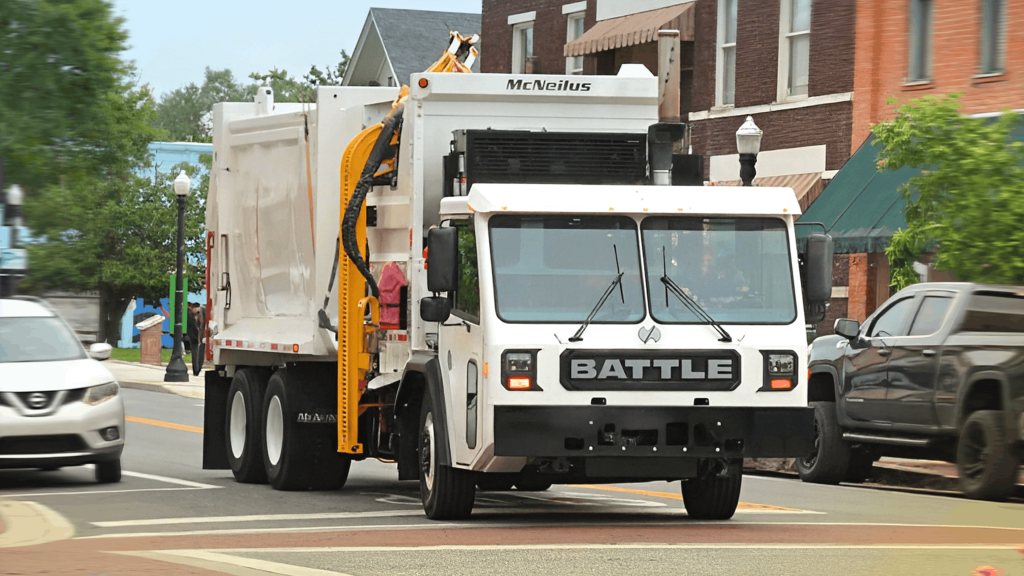
Preventative Maintenance Scheduling
Diesel fleets require the following frequent oil changes, emission system checkups. Engine diagnostics, and transmission services.
Electric refuse trucks eliminate many of those routine maintenance tasks. However, they do require battery health monitoring, health voltage system inspections and software diagnostics.
Cold Weather vs Hot Climate Performance
You must consider climate when comparing diesel and electric refuse trucks. The weather impacts things like range stability, battery efficiency, and daily route reliability.
In colder regions, electric refuse trucks can experience reduced battery efficiency and shorter operational range because of temperature-related energy losses. Heating systems, battery thermal management, and cab climate control all draw from the same energy reserve used for propulsion and hydraulic functions when it’s cold so they simply do not last as long.
Diesel engines generate waste heat naturally, which can be redirected to warm the cab without impacting operational range.
Hot climates like Florida, Texas, and other southern areas of the country present a different operational reality that must be overcome and considered.
- Electric trucks must actively cool battery systems to maintain optimal performance, which increases energy consumption during long collection days.
- Diesel refuse trucks are not immune to heat-related wear and tear. However, they are less sensitive to temperature swings from a range perspective so will operate better in such conditions.
For fleets operating in consistently warm environments, electric refuse trucks often maintain more stable performance than in extreme cold regions. However, thermal management systems and charging infrastructure must still be sized correctly for peak summer demand, especially during high-volume waste collection seasons.
Charging Time vs Refueling Speed
One of the most immediate operational differences fleet managers notice is the contrast between charging logistics and traditional diesel refueling when trying to pick a refuse truck for their operations.
Diesel refuse trucks can be refueled in minutes and immediately returned to service without any significant downtime This allows for flexible shift extensions, emergency route coverage, and minimal operational disruption when unexpected workload spikes occur. Refueling stations are also widely available and familiar to maintenance teams and operators to quickly use.
However, electric refuse trucks require structured charging schedules, typically overnight depot charging or opportunity charging between shifts. Depending on the electric refuse truck’s charger capacity and battery size, full charging can take several hours before your refuse truck can get back on the road again. This creates operational problems because you’re facing serious downtime and slower days which prove frustrating for drivers.
For municipal fleets running single daily routes, extended time from charging needs may not pose a major issue. However, private haulers or high-volume commercial fleets that operate multi-shift schedules must carefully evaluate whether charging infrastructure can support continuous vehicle availability when needed.
Diesel helps your truck get back out the road fast. Electricity requires precise scheduling and infrastructure coordination.
Hydraulic System Performance
Refuse trucks are not just chassis platforms. The body system, including packers, compactors, and automated side loaders, plays a central role in daily operational efficiency.
Diesel-powered refuse trucks traditionally use power take-off (PTO) systems connected to the engine to operate hydraulic components. This setup is well widely understood and mastered by drivers. It ‘s also field-tested. Technicians are highly familiar with diagnosing PTO-driven hydraulic performance issues.
Electric refuse trucks often use electrically driven hydraulic systems instead of traditional PTO setups.
This introduces several operational differences:
- More consistent hydraulic output regardless of engine RPM
- Reduced idle dependency during compaction cycles
- Potentially smoother packer operation
- Different diagnostic requirements for maintenance teams
From an operational standpoint, electric hydraulic integration can improve efficiency during stop-heavy routes because the truck does not need to idle at higher RPMs to maintain hydraulic pressure. However, maintenance teams must be trained on high-voltage hydraulic systems and integrated control software, which represents a transition cost for many fleets.
For fleet managers evaluating uptime and performance consistency, the body-chassis integration strategy is just as important as the powertrain itself.
Additional Considerations
Switching from diesel to electric refuse trucks is not just a fleet decision. It is a facility and infrastructure transformation.
Diesel fleets typically operate out of depots designed around fuel storage, maintenance bays, and basic service equipment. The operational footprint is predictable and requires minimal electrical infrastructure.
Electric refuse fleets require high capacity charging stations which can prove costly, load management systems and dedicated charging ports nearby to remain operational.
This can significantly alter how fleet yards are organized. Parking configurations may need to change to accommodate charging cable access, and electrical infrastructure upgrades can require permitting, engineering assessments, and capital investment.
For large refuse fleets, the transition may involve phased facility modernization rather than immediate full electrification. Fleet managers must coordinate with utility providers, engineers, and municipal planners to ensure the depot can support long-term charging demands of the electric refuse trucks without operational bottlenecks.
Parts Availability and Service
Another real-world operational difference that rarely appears in marketing materials is service ecosystem maturity.
Diesel refuse trucks benefit from decades of established parts distribution, technician training programs, and nationwide service networks. Replacement components for engines, transmissions, hydraulic systems, and emissions equipment are widely stocked and accessible. This reduces downtime risk and simplifies repair logistics.
Electric refuse trucks, while improving rapidly, still rely on more specialized parts supply chains. Battery systems, high-voltage components, and proprietary control modules may have longer lead times depending on the manufacturer and service network availability.
For fleet managers, this affects:
- Mean time to repair (MTTR)
- Parts inventory strategy
- Vendor relationships
- Preventative maintenance planning
Municipal fleets with in-house maintenance teams may need additional certifications and safety protocols to work on high-voltage systems. Private fleets may need to partner with specialized service providers rather than relying solely on traditional diesel repair shops.
Data, Telematics, and Fleet Optimization Capabilities
Electric refuse trucks are typically built with very advanced telematics and software integration which is often more difficult for drivers to learn. However, it also creates a major operational advantage in data-driven fleet management.
Modern electric refuse trucks can provide real-time insights into things like energy consumption per route, breaking efficiency, battery health, idle time, and route specific performance.
The newer diesel trucks increasingly offer telematics as well. However, electric platforms often deliver more granular energy and performance data by default due to their software-centric architecture.
For fleet managers focused on optimization, this data can significantly improve:
- Route planning efficiency
- Preventative maintenance scheduling
- Driver performance coaching
- Long-term cost forecasting
Electric fleets free you from relying on fuel usage and maintenance logs to analyze operational efficiency. Over time, this can lead to smarter route structuring, reduced wear on equipment, and more accurate budgeting.
In highly competitive or performance-driven refuse operations, enhanced telematics and analytics may become one of the most strategically valuable advantages of electric refuse trucks moving forward.
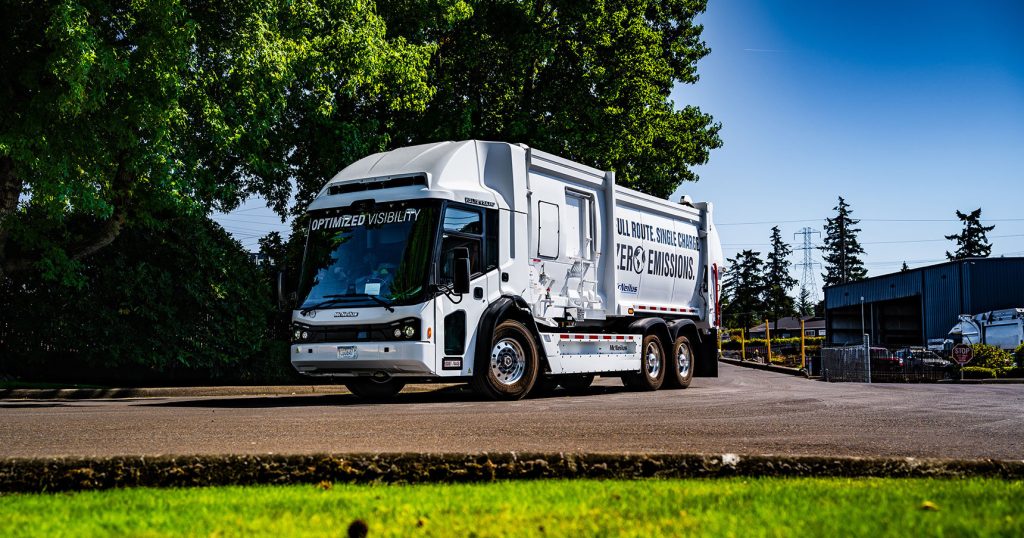
Route Performance
Refuse routes are built around frequent stops. Electric trucks excel with this because electric motors deliver instant torque from a dead stop.
This results in:
- Smoother acceleration
- Less drivetrain strain
- Reduced brake wear (due to regenerative braking)
Diesel trucks rely on transmission shifts and engine torque curves, which make them less efficient in stop-start cycles so that’ needs to be fractured into your decisions.
Diesel refuse trucks can operate long shifts without needing frequent refueling or charging like an electric truck. Heavy-duty diesel trucks often have significantly longer operational range than electric refuse trucks.This gives diesel fleets more flexibility on the road for extended routes, easier emergency rerouting and only minimal operational planning constraints.
Electric Route Predictability
Electric refuse trucks work best when routes are fixed, only short to medium in length and have a return to base daily policy.
Charging infrastructure and battery range become operational variables that you’ll need to plan around because if the route exceeds battery capacity or charging windows are missed, productivity is directly impacted.
Payload and Vehicle Weight Considerations
Battery systems add weight to electric refuse trucks. Some deployments report slightly lower payload capacity due to battery mass. You’ll need to consider the implications such as frequent dumping cycles, route inefficiencies, and increased planning that’s required for high-density collection areas.
Diesel trucks typically maintain higher payload flexibility, especially in heavy commercial waste applications.
Uptime, Reliability, and Fleet Availability
Electric trucks are increasingly demonstrating strong uptime metrics because they have much simpler drivetrains and fewer failure points.
Always remember that in refuse operations, uptime is everything. A single truck down can disrupt an entire route schedule.
Electric advantages:
- Fewer engine-related failures
- Reduced overheating risk
- Less vibration-related wear
Diesel advantages:
- Mature technology
- Widespread technician familiarity
- Faster field repair capability
Which Is Better for Refuse Fleets?
Diesel Refuse Trucks Make More Operational Sense When:
- Routes are long or unpredictable
- Infrastructure budgets are limited
- Immediate fleet scaling is required
- Technicians are diesel-specialized
- Payload flexibility is critical
Electric Refuse Trucks Make More Operational Sense When:
- Routes are fixed and short-range
- Fuel cost reduction is a priority
- Sustainability mandates exist
- Noise reduction is valuable
- Long-term TCO matters more than upfront cost
Which One? Electric or Diesel Refuse Trucks
The real operational difference between diesel and electric refuse trucks is not just the truck’s power source. Instead, it’s about operational considerations.
- Diesel fleets prioritize flexibility, proven reliability, and infrastructure simplicity.
- Electric fleets prioritize efficiency, predictable routes, lower maintenance, and long-term operating savings.
For most refuse operations today, the most strategic approach is not taking the leap with full replacement overnight. Instead you might want to phase in electric refuse trucks. To compare options available now, browse our in-stock refuse trucks inventory.