Material contamination has quietly cost municipalities billions and undermined sustainability goals for decades. McNeilus’ AI-powered contamination detection system is changing the equation, one hopper at a time.
Picture this: a resident dutifully rinses out their yogurt container, separates their cardboard, and sets their recycling bin at the curb every Tuesday morning. They feel good about it. They should feel good about it. But somewhere down the street, their neighbor has tossed a plastic bag stuffed with Styrofoam packing peanuts into the same blue bin. By the time that truck reaches the sorting facility, an entire load of otherwise clean recyclables may be compromised, rejected, landfilled, or sold at a steep discount.
This scenario plays out millions of times a week across America. It is not a moral failing, it is an information problem. Haulers and municipalities have historically had no reliable way to identify which households, which routes, or which neighborhoods are generating the most contamination. Without that data, education campaigns are scattershot, compliance enforcement is reactive at best, and sustainability goals remain aspirational rather than measurable.
McNeilus, one of the most recognized names in refuse and recycling vehicle manufacturing, has built an answer to this problem. Their Material Contamination Detection system doesn’t just flag bad loads. It uses artificial intelligence, edge computing, and cloud analytics to create a granular, actionable picture of contamination across an entire collection operation. And it does it invisibly, automatically, and without slowing down a single route.
Why Contamination Is the Recycling Industry’s Billion-Dollar Blind Spot
Recycling contamination is one of those issues that everyone in the industry acknowledges and very few have managed to crack. The challenge is systemic: it exists at the point of collection, long before materials reach a materials recovery facility (MRF). By the time a contamination problem is visible, when a bale of paper is rejected because it contains too many plastic bags, or when a glass processor identifies shards of ceramics in a batch, the damage has already been done.
The downstream consequences ripple outward. Sorting facilities face accelerated equipment wear from non-recyclable items moving through machinery designed for specific material streams. Processing costs rise. The quality of recovered material declines, reducing its resale value. Haulers miss diversion targets that are increasingly tied to municipal contracts and sustainability commitments. Cities fall short of their zero-waste pledges and lack the documentation to understand why, or who is responsible.
Compounding the problem is the education gap. Most residents genuinely want to recycle correctly, but recycling rules are notoriously inconsistent. What is accepted in one city is rejected in another. Plastic bags, among the most common contaminants, are widely believed to be recyclable by a significant portion of consumers, despite the fact that they clog sorting equipment and frequently contaminate entire loads. Without the ability to tie contamination events to specific addresses, haulers have no mechanism for targeted outreach. You cannot correct behavior you cannot see.
Introducing AI at the Hopper: How McNeilus Built a Smarter Collection System
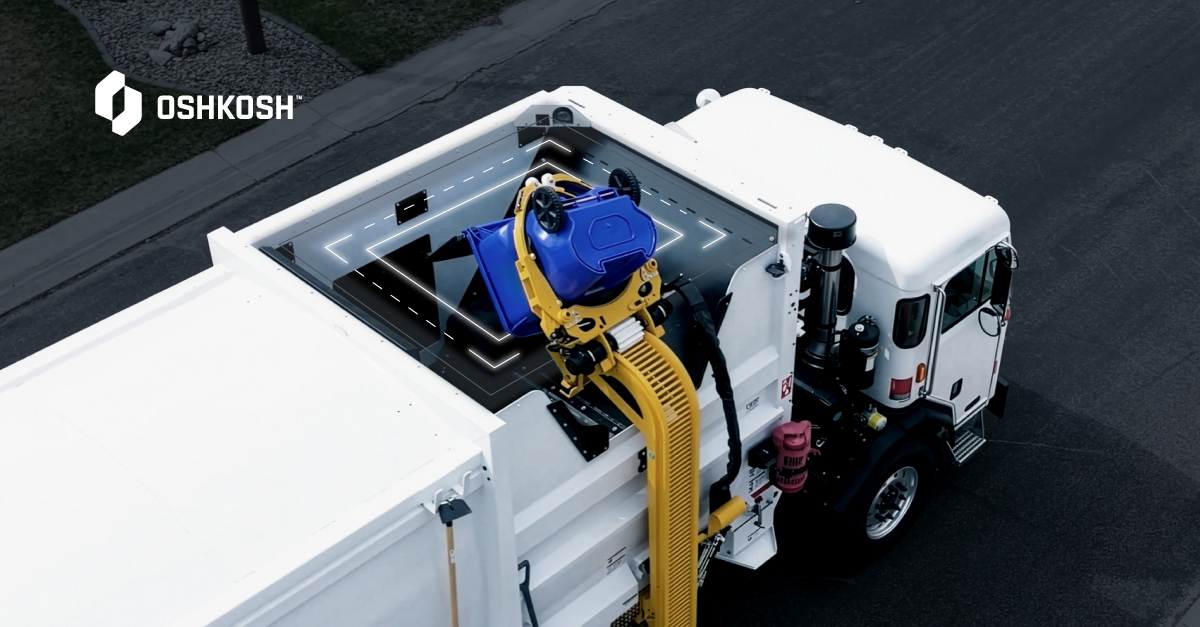
The McNeilus Material Contamination Detection system begins its work the moment material enters the truck’s hopper, and it works entirely in the background. There is no driver interface to monitor, no manual flagging process, and no disruption to the collection workflow. The technology does its job quietly so that drivers can do theirs.
The process follows a four-stage intelligence loop:
- Detect and Analyze: High-performance cameras scan materials as they are emptied into the hopper, identifying items that do not belong in the stream, whether that is recyclable materials misplaced in refuse, or contaminants like plastic bags and Styrofoam appearing in recycling bins.
- Process and Upload: Once captured, data is encrypted and securely sent to the cloud. Each pickup is logged, time-stamped, and rated by contamination level. This creates a permanent, searchable record tied to specific service addresses.
- Review and Act: Operations managers access a secure, interactive cloud dashboard where they can review contamination images, identify patterns across routes or service areas, and track trends over time. Photo verification is included for each contaminated pickup.
- Educate and Improve: Armed with clear data, haulers and municipalities can target education campaigns at specific households, document compliance for sustainability reporting, and make the case to governing bodies with real evidence rather than estimates.
The system’s AI model is not static. It uses continuous learning to expand its detection capabilities as it encounters new materials and contamination patterns. This is particularly important as the waste stream itself evolves; the rise of e-waste, lithium-ion batteries, and new packaging formats means that today’s contaminant list will look different from tomorrow’s. McNeilus has built a system designed to grow with those challenges, not fall behind them.
More Than 80 Materials, and Counting
One of the most significant differentiators of McNeilus’ system is the breadth of its detection capabilities. While competitive detection systems typically identify only one to three material types, most commonly limited to black plastic bags, McNeilus’ AI can identify over 80 distinct contaminant types with exceptional accuracy.
The system recognizes contamination across multiple categories:
- Flexible plastics, including plastic bags and film wrap
- Foam products such as Styrofoam and expanded polystyrene
- Textiles, clothing, and fabric waste
- Glass, ceramics, and porcelain
- Yard waste and organic material
- Hazardous materials that pose safety and regulatory risks
This breadth matters for a practical reason: contamination is not a monolithic problem. Different communities face different challenges depending on demographics, housing density, local recycling program rules, and consumer behavior. A suburban municipality managing a large single-family residential route may struggle primarily with bagged recyclables and yard waste. A dense urban district may see higher rates of textile dumping or electronics. The McNeilus system is customizable to each community’s contamination priorities, which means municipalities receive actionable data specific to their situation rather than a one-size-fits-all report.
The Case for Vehicle-Agnostic Technology
One of the most pragmatic aspects of McNeilus’ design philosophy here is the decision to make the system vehicle-agnostic. The contamination detection kit is engineered as a standalone, modular solution that integrates with any residential side-loader, regardless of manufacturer. To see how the latest side-loader platform handles urban routes, our breakdown of how the McNeilus Zero Radius Side Loader maximizes productivity covers this in detail. For municipalities and haulers operating mixed fleets, or for those who are locked into existing vehicle contracts, this removes what would otherwise be a significant barrier to adoption.
Each kit includes high-performance cameras, a control box, wiring harnesses, and lighting components engineered for durability in real-world collection conditions, which is to say, the messy, variable, high-vibration environment of a working garbage truck. Installations are completed by McNeilus service teams to ensure precise setup. The modular design means the system can be added to existing vehicles without the capital outlay of a full fleet replacement, dramatically lowering the cost of entry for cash-strapped public works departments.
This is not a minor consideration. Municipal procurement cycles are long, and fleet lifecycles even longer. A technology that requires new vehicles to function is a technology that most municipalities will not see for a decade. A retrofit kit that can be installed on existing rolling stock is one that can be deployed this year.
Turning the Dashboard into a Policy Tool
The cloud-based dashboard that McNeilus provides is where the system’s real value becomes tangible for operations managers and sustainability directors. It is one thing to know that contamination is a problem on a given route. It is something else entirely to see, on a map, which specific addresses are generating contamination events week after week, with photographic evidence attached.
This level of granularity transforms contamination management from a reactive complaint-handling process into a proactive, data-driven program. Managers can identify neighborhoods where particular types of contamination are clustering and tailor educational mailings or digital outreach accordingly. They can document the impact of those interventions over time, showing, with hard numbers, that a targeted campaign reduced plastic bag contamination on a specific route by a measurable percentage.
For municipalities working under sustainability-driven contracts or seeking to demonstrate progress toward diversion targets, this documentation is invaluable. It provides the evidentiary foundation that grant applications, council reports, and regulatory filings require. And because the AI’s high accuracy eliminates the need for continuous manual verification of results, a significant labor cost in less sophisticated systems, data can be sent directly to customers or incorporated into automated workflows, reducing the back-office burden on already lean public works teams.
McNeilus vs. The Competition: A Direct Comparison
The contamination detection market has grown in recent years as municipalities have increasingly demanded technological solutions to a chronic operational problem. But not all systems are equal, and the differences between what McNeilus offers and what most competing products deliver are substantial.
| Feature | McNeilus System | Typical Competing Systems |
| Detection Range | Over 80 material types with exceptional accuracy | 20-30 material types (typically only black plastic bags) |
| System Complexity | Few durable components, easy to install and maintain | Complex multi-sensor setups requiring frequent maintenance |
| Customization | Tailored to each city’s specific contamination priorities | Limited; often preset contaminant types only |
| Vehicle Compatibility | Any residential side-loader, any manufacturer | Typically same-brand vehicles only |
| AI Learning | Continuously trains on new contaminants like batteries and e-waste | Static model with minimal adaptive capability |
The gap in detection range alone is striking. For a municipality trying to manage a complex waste stream, one that includes everything from pizza boxes and glass jars to textiles, yard bags, and the occasional paint can, a system that only flags black plastic bags is solving a fraction of the problem. McNeilus has approached the detection challenge comprehensively, which is reflected in the breadth of its model training.
Part of a Broader Vision: McNeilus and the Connected Fleet
It would be a mistake to view the contamination detection system in isolation. McNeilus is a company in the middle of a deliberate transformation, from a manufacturer of mechanical equipment to a provider of intelligent, connected refuse and recycling solutions. The contamination detection offering sits within a broader innovation portfolio that includes autonomous collection technology (HARR-E and CartSeeker), fleet connectivity solutions (ClearSky), the Volterra electric refuse truck lineup (ZFL and ZSL), and now AI-powered material intelligence.
The vision that emerges from this suite of technologies is one of a fully connected, data-rich collection operation, where trucks know where they are, what they are picking up, whether that material is clean, and how the day’s work connects to long-term sustainability targets. Contamination detection is the sensory layer of that vision: the mechanism by which trucks do not merely collect, but understand.
This matters for the industry’s longer-term trajectory. For an operational view of fleet data tools, the role of telematics in managing a refuse fleet covers this in detail. As cities set increasingly ambitious climate and zero-waste goals, as recycling contracts become more performance-linked, and as extended producer responsibility (EPR) legislation expands across more states, the haulers and municipalities that will thrive are those with the data infrastructure to demonstrate, document, and continuously improve their environmental performance. Technology like McNeilus’ contamination detection system is not a luxury for early adopters, it is becoming the baseline expectation for a responsible, competitive operation.
What This Means for Communities
Ultimately, this technology is not just about operational efficiency or contract compliance. It is about building the feedback loop that communities have always needed to actually improve recycling behavior at scale.
For years, public awareness campaigns around recycling have operated in an informational vacuum, broadcasting general guidelines to entire populations without any mechanism to know whether the message was landing, or with whom. The result has been persistent rates of wish-cycling (putting items in the bin and hoping they are recyclable), confusion, and the slow erosion of public trust in recycling programs when residents suspect their efforts are not making a difference.
When municipalities have address-level contamination data, they can send targeted notifications to specific households. They can congratulate neighborhoods that have improved their recycling quality. They can follow up with repeat offenders not with fines and threats but with education and resources. They can show their city councils, in real numbers, the reduction in contamination rates following a public outreach campaign. They can make recycling a genuine community partnership rather than a one-way instruction.
This is what McNeilus means when it describes contamination detection as turning data into action, helping haulers, municipalities, and citizens work together toward clean recycling streams, effective waste management, and a more sustainable future.
The Bottom Line
Material contamination has been an expensive, stubborn, and largely invisible problem for the refuse and recycling industry for as long as modern recycling programs have existed. It costs money, undermines sustainability goals, and erodes community trust. What it has lacked, until now, is a practical, scalable, vehicle-agnostic technology that can see it happening in real time and turn that visibility into usable data.
McNeilus’ Material Contamination Detection system delivers exactly that. With the ability to identify over 80 material types, a continuously learning AI model, seamless cloud-based analytics, and the flexibility to integrate with any residential side-loader on the market, it represents a genuine step change in how collection operations understand and manage the waste streams they serve.
For haulers facing tightening margins and rising compliance demands, for municipalities pursuing ambitious sustainability commitments, and for communities that want their recycling efforts to actually matter, the era of informed collection has arrived. Every stop is now a data point. Every hopper tells a story. And for the first time, the industry has the tools to listen.