Every missed pickup erodes trust, triggers penalties, and sends costs spiraling. For waste operators running tight margins on municipal contracts or private hauling routes, reducing refuse fleet downtime is the single most controllable lever for protecting revenue and reputation.
This guide walks fleet managers through the specific strategies, metrics, and partnerships that keep garbage trucks on the road and routes on schedule.
Key Takeaways
- Unplanned vehicle breakdowns cost thousands of dollars per hour. A single garbage truck out of service can easily cost $500 to $1,200 per hour when factoring in driver wages, missed disposal fees, overtime, and contract penalties. A single vehicle loses over $15,000 annually due to downtime alone.
- Fleet managers can cut unplanned downtime by 30 to 50 percent in 12 months by combining preventive maintenance, driver training, real time data monitoring, and disciplined parts inventory management instead of relying on reactive fixes.
- Partnering with a dedicated refuse maintenance provider like Ten-8 Industrial reduces administrative overhead, speeds repairs across Florida and the Southeast, and supports both new and older garbage trucks.
- Fleet management software and telematics systems are only as effective as the repair network behind them. Connecting your operational data to a high-capacity service and parts partner is what actually keeps waste trucks on the road.
- Every section below shows what to do in the next 30 to 90 days to improve fleet efficiency and uptime, with real-world examples, simple charts, and concrete data tables.
The High Cost Of Refuse Fleet Downtime
Picture a Monday at 5:45 a.m. A rear loader throws a hydraulic hose on its first commercial stop. Twenty minutes later, dispatch learns a front loader across town has a packer motor fault. Two trucks down before the first landfill run. The fleet scrambles: overtime drivers, a rented replacement, rerouted residential stops, and a commercial customer calling about missed service.
This scenario plays out constantly across waste fleets. The difference between planned downtime (scheduled preventive maintenance, inspections, compliance checks) and unplanned downtime (roadside breakdowns, emergency hydraulic repairs, unexpected engine failures) is enormous. Unplanned events cost three to five times more per incident because they cascade into lost productivity, overtime, towing fees, and contract penalties.
Total costs of fleet downtime range from $200 to over $500 per hour when you add driver wages, lost disposal revenue, overtime, towing, and the administrative overhead of rescheduling crews. On high-volume routes, those costs can exceed $1,000 per hour. Industry data shows refuse trucks average about 8.7 days of unplanned downtime per year, translating to $3,900 to $6,600 per truck annually in invisible losses beyond the repair bill.
The impact on fleet performance is real: missed on-time route completion targets, contract penalties on municipal bids, and frustrated commercial accounts. Ten-8 Industrial helps Florida and Southeast fleets convert that unpredictable vehicle downtime into scheduled service windows through fast diagnostics, parts availability, and mobile repair capability.
Where Refuse Fleets Typically Lose Uptime
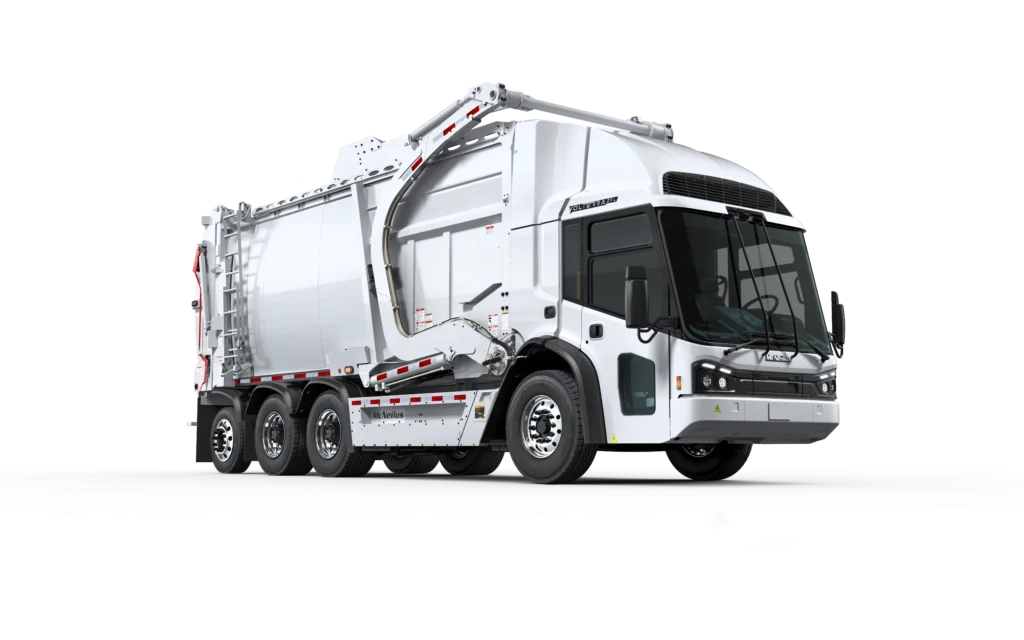
The most common failure modes that increase fleet downtime in waste collection fall into a few predictable categories: hydraulic leaks, packer failures, lift arm damage, brake wear, electrical faults, and emissions system derates. Reducing downtime in refuse collection fleets requires a transition from reactive repairs to proactive maintenance focused on these specific areas.
| Issue | Immediate Effect | Average Time Off-Road |
| Hydraulic hose failure (rear loader) | Route aborted mid-shift | 1 to 2 days |
| Lift arm cylinder leak | Commercial stops skipped | 2 to 4 days |
| Transmission failure | Entire truck out of service | 2 to 5 days |
| Electrical sensor or wiring fault | Derate, limp-home mode | 0.5 to 1 day |
| Brake system failure | Safety compliance stop | ~1 day |
| DEF/emissions fault | Derate on route | 0.5 to 1 day |
Older trucks incur 20 to 40 percent higher annual maintenance costs, compounding these problems. Disconnected systems like paper inspections, phone-based dispatch, and separate vendor portals create blind spots in fleet visibility for fleet managers, leading to slow data driven decisions and chronic delays.
Working with Ten-8 Industrial centralizes diagnostics and repair planning. Their McNeilus expertise, multi-location support, and field repair capabilities shorten the gap between “defect reported” and “truck back in service,” directly addressing the major disruptions that hurt customer satisfaction.
Quantifying Your Fleet Downtime Baseline
You cannot reduce what you do not measure. Before investing in new fleet management software, training programs, or service providers, fleet managers need a clear picture of where vehicle downtime is concentrated.
Track these metrics specifically for your garbage trucks:
| Metric | Formula | Example Value |
| MTBF (mean time between failures) | Total engine hours / number of failures | 450 hours |
| MTTR (mean time to repair) | Total repair hours / number of repair events | 18 hours |
| Route completion rate | (Scheduled routes minus missed) / total scheduled | 92% |
| Unplanned vs. planned downtime ratio | Unplanned DT hours / total DT hours | 65% unplanned |
To calculate the total cost per hour of fleet downtime for a refuse truck, include fuel wasted on detours, overtime pay, rental truck daily rates, landfill window constraints, and the administrative overhead of rescheduling crews. Analyzing downtime trends helps identify recurring issues and improve maintenance practices, turning raw numbers into a prioritized action list.
Ten-8 Industrial technicians and account reps help new customers review 6 to 12 months of maintenance history and route failures to pinpoint top downtime drivers. Optimizing maintenance schedules prevents unexpected breakdowns, and that process starts with an honest baseline.
Building A Preventive Maintenance Program That Actually Works
There is a wide gap between “checking the PM box” and a refuse-specific, data-informed preventive maintenance strategy tied to route patterns, packer cycles, and local climate. Florida heat and coastal corrosion, for instance, accelerate wiring degradation and hydraulic seal wear faster than OEM calendar intervals assume.
Key strategies for minimizing fleet downtime include preventive maintenance and route optimization. Preventive maintenance extends component life by scheduling maintenance based on actual usage, not just calendar dates. Set PM intervals by engine hours and hydraulic cycle counts:
- Front loaders: Hydraulic filter service every 500 engine hours or 1,000 compaction cycles. Brake inspection every 25,000 miles or quarterly. Electrical harness checks every six months.
- Rear loaders: Packer blade and wear shoe inspection every 90 days. Hydraulic fluid analysis every 500 hours.
- Side loaders: Arm pivot and cylinder seal inspection every 250 hours of arm operation.
Consolidate PM tasks to minimize shop time. Pair lube services, hydraulic filter changes, brake inspections, and electrical harness checks into one planned service window per truck.
| Interval Type | OEM Recommended | Field-Tested (Heavy Urban Routes) | Risk of Extending |
| Hydraulic fluid/filter | 500 hours | 400 hours | Seal failure, cavitation |
| Brake inspection | 25,000 miles | 18,000 miles (frequent stops) | Safety compliance stop |
| Electrical harness check | 12 months | 6 months (coastal climate) | Cascading wiring faults |
| Packer blade/wear shoe | 6 months | 90 days (high-tonnage routes) | Compactor damage |
Structured preventive maintenance reduces unplanned downtime by 40 to 50 percent. Daily inspections catch minor issues before major failures occur. Proactive inspections minimize costly repairs and reduce downtime across the fleet.
Ten-8 Industrial’s role as a McNeilus-focused service and parts provider gives fleets access to current factory recommendations, field bulletins, and pattern failure data that refine preventive maintenance schedules for both new and older units.
Real-Time Diagnostics, Telematics, And Fleet Management Software
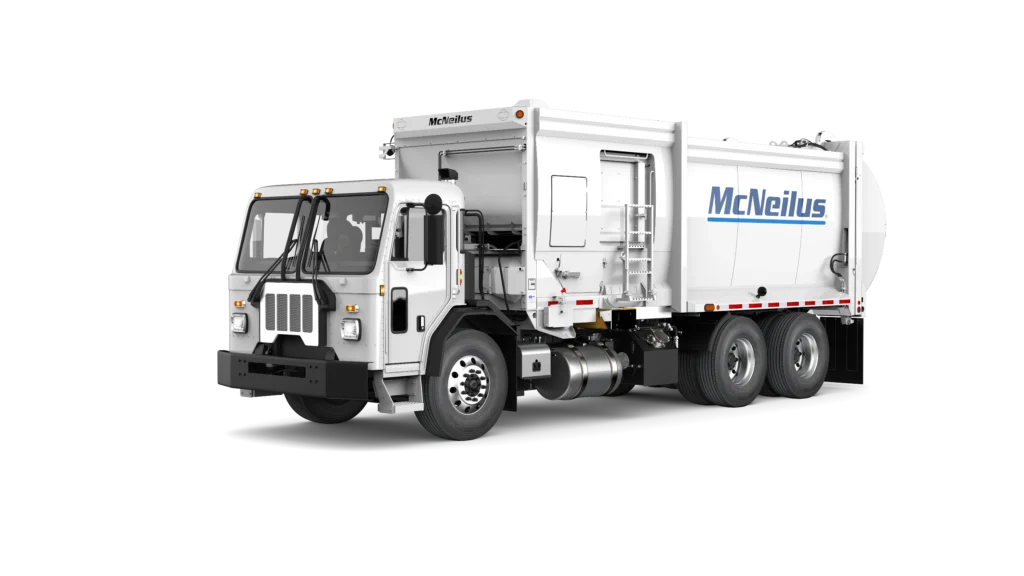
Modern garbage trucks stream data continuously: engine fault codes, hydraulic temperatures, PTO cycle counts, battery status for EVs like the McNeilus Volterra electric refuse platform, and GPS-based vehicle locations. Using telematics for real-time monitoring helps track vehicle health and predict failures before they strand a truck mid-route.
Essential fleet management software capabilities for reducing refuse fleet downtime include:
- Live fault code alerts and automated alerts for abnormal readings
- Idle time monitoring to flag excessive idling, which doubles engine hour accumulation without productive mileage
- Driver behavior insights (harsh braking, rapid acceleration)
- Automated PM scheduling triggered by actual usage metrics like engine hours and compaction cycles
- Integration with work order systems for seamless repair tracking
Real-time diagnostics can alert fleet managers to engine issues immediately. Telematics can reduce emergency roadside events by sixty percent. Predictive maintenance can reduce unplanned downtime by forty to fifty percent. Telematics data enables predictive maintenance alerts based on usage, and implementing digital vehicle inspections allows for early detection of defects. Digital workshop management tools can standardize repair procedures across locations.
But software alone does not fix trucks. Ten-8 Industrial can receive diagnostic information from your telematics systems, pre-identify likely parts, and schedule shop or field repairs before a fault escalates into a roadside breakdown, connecting fleet visibility to action.
| Metric | Without Connected Diagnostics | With Diagnostics + Ten-8 Industrial |
| Average time from fault to repair | 24 to 48 hours | Often within 12 hours (parts pre-ordered) |
| On-route breakdowns per quarter | 8 to 12 events | 3 to 6 events (30 to 50% reduction) |
| Emergency tows per quarter | 4 to 7 | 1 to 3 |
| Repair cost overruns/comebacks | Higher (misdiagnosis, low stock) | Lower (OEM diagnostics, stocked parts) |
Advanced systems that connect real time insights from telematics to a qualified service partner are what significantly reduce downtime and deliver meaningful cost savings.
Driver Behavior, Training, And Daily Inspections
Driver behavior influences fifty to sixty percent of vehicle failures in refuse fleets. Aggressive driving can increase drivetrain wear by up to forty percent, and excessive idling accelerates engine wear without adding productive mileage. These are not abstract numbers. They show up as premature hydraulic seal failures, transmission issues, and brake replacements that quietly drain maintenance costs.
Driver training programs can reduce unnecessary damage to refuse collection vehicles. Fleets investing in driver training see a twenty-five percent reduction in downtime. Training drivers to report issues early can prevent countless breakdowns that would otherwise turn into extended downtime and costly breakdowns.
Daily inspections help prevent unscheduled overnight repairs. Garbage truck drivers should document these items pre-trip and post-trip:
- Hydraulic hose condition and leaks around cylinders
- Packer operation noises and lift arm play
- Brake feel, warning lights, fluid levels
- Hopper and body damage
Telematics data on harsh braking, rapid acceleration, PTO usage, and idle minutes can feed short monthly coaching sessions. Link improvements in driver behavior to measurable reductions in costly repairs so drivers see the impact of their habits on truck performance.
Fleet managers should standardize easy-to-use digital inspection forms and fast defect reporting workflows so issues move from driver note to scheduled repair at Ten-8 Industrial without paperwork delays or manual processes. Regular inspections catch minor issues before major failures occur, and daily inspections can prevent major vehicle failures entirely.
Ten-8 Industrial can support driver and supervisor training days, walking teams through common failure patterns on McNeilus front loaders and rear loaders. Teaching crews what to watch for and when to pull a truck from service prevents catastrophic failures and protects vehicle reliability.
Parts Strategy: Keeping Critical Components On Hand
A truck parked in the yard for three days waiting on a simple hydraulic hose or sensor is a silent budget killer. Parts shortages extend fleet downtime and hurt fleet efficiency far more than most waste operators realize. Maintaining an inventory of critical spare parts prevents delays during repairs.
Here are the refuse-specific critical components fleets should either stock in-house or ensure fast access to through Ten-8 Industrial:
| Part Category | Typical Failure Scenario | Recommended Stock (20-Truck Fleet) |
| Hydraulic hoses and fittings | Lift arm leaks, hose bursts | 4 to 6 hoses of common diameter |
| Cylinder seal kits | Slow leaks, weepage | 3 to 5 kits per major cylinder type |
| Packer blades and wear shoes | Material wear in compactor | 2 sets per packer configuration |
| Brake components (pads/shoes) | Heavy braking on collection routes | Full set per truck, spares for 20% of fleet |
| Sensors/body control modules | Electrical faults, DEF/emissions | 1 spare per common module per truck type |
Ten-8 Industrial’s extensive McNeilus and multi-make parts inventory across Florida and Georgia, plus their ability to support older fleets, allows refuse operators to avoid overstocking low-usage items yet still repair quickly when failures occur. You can track parts availability through their team rather than managing dozens of vendor relationships.
Centralizing parts purchasing with Ten-8 Industrial cuts administrative overhead, standardizes parts quality, and gives better pricing and vehicle usage visibility across all fleet operations. This approach lets fleet managers focus on operations instead of chasing part numbers.
Technician Capability And The Right Maintenance Partner
Garbage trucks are among the most complex vocational fleet vehicles, combining heavy hydraulics, electronics, body controls, and chassis systems. Generic truck shops often lack the specialized knowledge required, leading to longer MTTR, repeat repairs, and unnecessary downtime.
Core technician skill sets for refuse work include hydraulic diagnostics, packer and body repair, electrical troubleshooting for body controllers, EV safety for platforms like Volterra, and in-depth familiarity with front, side, and rear loader designs.
| Capability | Generic Heavy-Truck Shop | Refuse-Focused Partner (Ten-8 Industrial) |
| Familiarity with McNeilus bodies | Limited or none | Factory-trained technicians |
| Access to OEM technical information | Generic service manuals | McNeilus dealer-level documentation |
| Stock of refuse-specific parts | Minimal | Extensive, multi-make inventory |
| Field repair services | Rarely available | Mobile service across FL and Southeast |
| Warranty repair capability | Usually not authorized | McNeilus authorized |
Ten-8 Industrial operates dedicated refuse service locations in Lake Wales, Florida (2001 Thompson Nursery Rd, Lake Wales, FL 33859) and Villa Rica, Georgia (1 McNeilus Ct, Villa Rica, GA 30180). Their technicians handle warranty repair, structural work, and body rebuilds that extend vehicle life and monitor vehicle performance patterns over time.
Partnering with Ten-8 Industrial allows fleets to reserve internal shop resources for light work while routing complex or time-critical jobs to a provider that turns trucks faster, directly lifting fleet uptime and improving engine health across the operation.
Coordinating Fleet Operations, Routes, And Shop Capacity
Reducing refuse fleet downtime is not only about the shop. It requires smart coordination among dispatch, route planners, and maintenance so that PMs and repairs happen when trucks can be spared. Route optimization reduces wear and tear on vehicle brakes and tires, and optimizing routes decreases engine strain and mechanical failures.
Practical tactics for fleet managers:
- Stagger PMs across front loaders, rear loaders, side loaders, and roll-offs so no single collection day loses multiple trucks
- Align shop appointments at Ten-8 Industrial around lighter route days
- Use loaner or rental units only as a last resort, not as a crutch for poor planning
- Optimize routes to reduce stop density and fuel usage on high-wear segments, improving fuel efficiency and fuel costs
A weekly “uptime huddle” that includes fleet managers, operations supervisors, and Ten-8 Industrial account reps can review trucks down, upcoming inspections, and parts ETA. This simple meeting avoids last-minute route cancellations and reduces the emergency phone calls, rescheduled shifts, and manual spreadsheet updates that drain administrative time. It also gives leadership confidence in route coverage, fleet health, and fleet visibility for the coming week, supporting higher customer satisfaction through reliable service.
Measuring Results: Before-And-After Downtime KPIs
Once new maintenance practices and a partnership with Ten-8 Industrial are in place, track a 6 to 12 month before-and-after period to quantify gains in fleet efficiency and justify future investments. Strategic vehicle replacement based on lifecycle cost analysis improves fleet performance, but even without buying new trucks, the gains from better practices are measurable.
Monitor these KPIs:
| KPI | Baseline Year | After Optimization |
| Unplanned downtime hours per truck per quarter | 120 hours | 70 hours |
| Average repair cycle time | 22 hours | 14 hours |
| PMs completed on time | 74% | 93% |
| On-route breakdowns per quarter | 14 events | 7 events |
| Maintenance cost per mile | $0.38 | $0.27 |
Ten-8 Industrial provides quarterly review meetings that analyze work order history, parts consumption, and recurring faults, turning raw maintenance data into actionable insights for continuous improvement. Fleets can significantly reduce downtime by acting on these reviews.
Set specific, time-bound targets such as “reduce unplanned downtime by 30% within 12 months” and communicate these goals to operations, drivers, and technicians so everyone is aligned on fleet operational priorities and uptime targets.
Why Partnering With Ten-8 Industrial Cuts Refuse Fleet Downtime
Dedicated refuse support is the fastest, lowest-risk way for most waste fleets to reduce fleet downtime without massively expanding in-house maintenance staffing or capital expenditure on parts inventory. A case study from a 90-truck municipal fleet found that structured maintenance partnerships saved approximately $500 per vehicle per month and $4,200 per repair event.
Ten-8 Industrial’s core strengths for refuse fleets:
- McNeilus factory-backed expertise with comprehensive tools for diagnostics and body repair
- Parts for every make and model, including older garbage trucks that other dealers deprioritize
- Two strategically located facilities in Lake Wales, FL and Villa Rica, GA
- Mobile field repair capability that minimizes transport delays
- Warranty repair authorization and compliance documentation for municipal contracts
Ten-8 Industrial helps fleets standardize inspections, PM procedures, and repair approvals, reducing administrative overhead while improving documentation for safety audits. They work as an extension of your internal team, sharing failure trends, route profiles, and growth plans so they can pre-position parts and staffing to support peak seasons.
Fleet managers should treat Ten-8 Industrial as a long-term partner: share your engine performance data, service schedules, and fleet growth plans so they can proactively support your operation. Visit Ten-8Industrial.com to discuss a downtime reduction plan tailored to your fleet’s size, loader mix, and operational region.
Conclusion: Building A Downtime-Resilient Refuse Fleet
Combining preventive maintenance, driver training, telematics-driven diagnostics, smarter parts management, and a specialized partner like Ten-8 Industrial can transform garbage truck uptime within a year. Structured preventive maintenance improves fleet uptime significantly, and fleets can reduce unplanned downtime by 40 to 50 percent with predictive maintenance and the right support network.
Reducing fleet downtime is not a one-time initiative. It is an ongoing discipline that requires continuous measurement, operational coordination, and periodic adjustment of PM intervals and parts strategies. Avoiding unnecessary downtime means staying committed to the process quarter after quarter.
Fleets of all sizes, from small private haulers to large municipal operations across Florida and the Southeast, can start with one or two high-impact changes. Implement daily digital inspections and shift your heavy repairs to Ten-8 Industrial. Expand from there as you see downtime incidents drop and fleet performance climb.
Visit Ten-8Industrial.com to discuss how to keep your refuse fleet on the road, reduce costs on costly repairs, and maximize route completion reliability.
FAQ: Reducing Refuse Fleet Downtime
These FAQs address common questions fleet managers ask when they begin focusing on refuse fleet uptime and considering a maintenance partner.
How quickly can a refuse fleet see downtime reductions after changing its maintenance approach?
Fleets that adopt structured PM, digital inspections, and a Ten-8 Industrial partnership typically see early improvements within 60 to 90 days as emergency repairs decline and parts delays shorten. More substantial 25 to 40 percent reductions in unplanned downtime usually emerge over 9 to 12 months as preventive maintenance schedules mature and technicians identify pattern failures.
Can Ten-8 Industrial help fleets that operate older garbage trucks, not just new McNeilus units?
Yes. Ten-8 Industrial stocks and sources parts for all makes, models, and truck ages. Their technicians routinely support older front loaders and rear loaders that many OEM dealers deprioritize. This is critical for municipalities and smaller haulers extending asset life and managing capital expenditure carefully.
How does partnering with Ten-8 Industrial interact with our existing fleet management software?
Ten-8 Industrial works alongside whatever fleet management software a customer already uses. They align PM schedules, share repair data, and coordinate around telematics alerts so fleets keep their current comprehensive tools while gaining a specialized repair and parts backbone that turns data into action.
What should a small fleet do first if it cannot overhaul everything at once?
Start with two steps: implement consistent digital pre-trip inspections and shift all medium and heavy repairs to Ten-8 Industrial. These two changes quickly stabilize uptime without requiring new internal hires or major investment, and they lay the foundation for more advanced improvements in vehicle performance and engine performance over time.
Does reducing downtime always require buying new trucks?
Not at all. While strategic replacement matters, most fleets capture significant uptime gains through better maintenance practices, parts availability, and driver behavior improvements. Ten-8 Industrial’s ability to keep older garbage trucks reliable and compliant means you can improve fleet operational results and schedule maintenance effectively without replacing your entire fleet.