Urban refuse collection is a completely different operational environment than suburban or rural service so you’ll need to factor that into the equation when considering the proper loader. Narrow streets, dense parking, tight alleys, one-way traffic patterns, and constant pedestrian activity all create friction that slows down routes and increases operator fatigue. For fleet managers and municipal leaders, the real challenge is not just collecting waste, but how to do it efficiently, safely and consistently in areas with limited space.
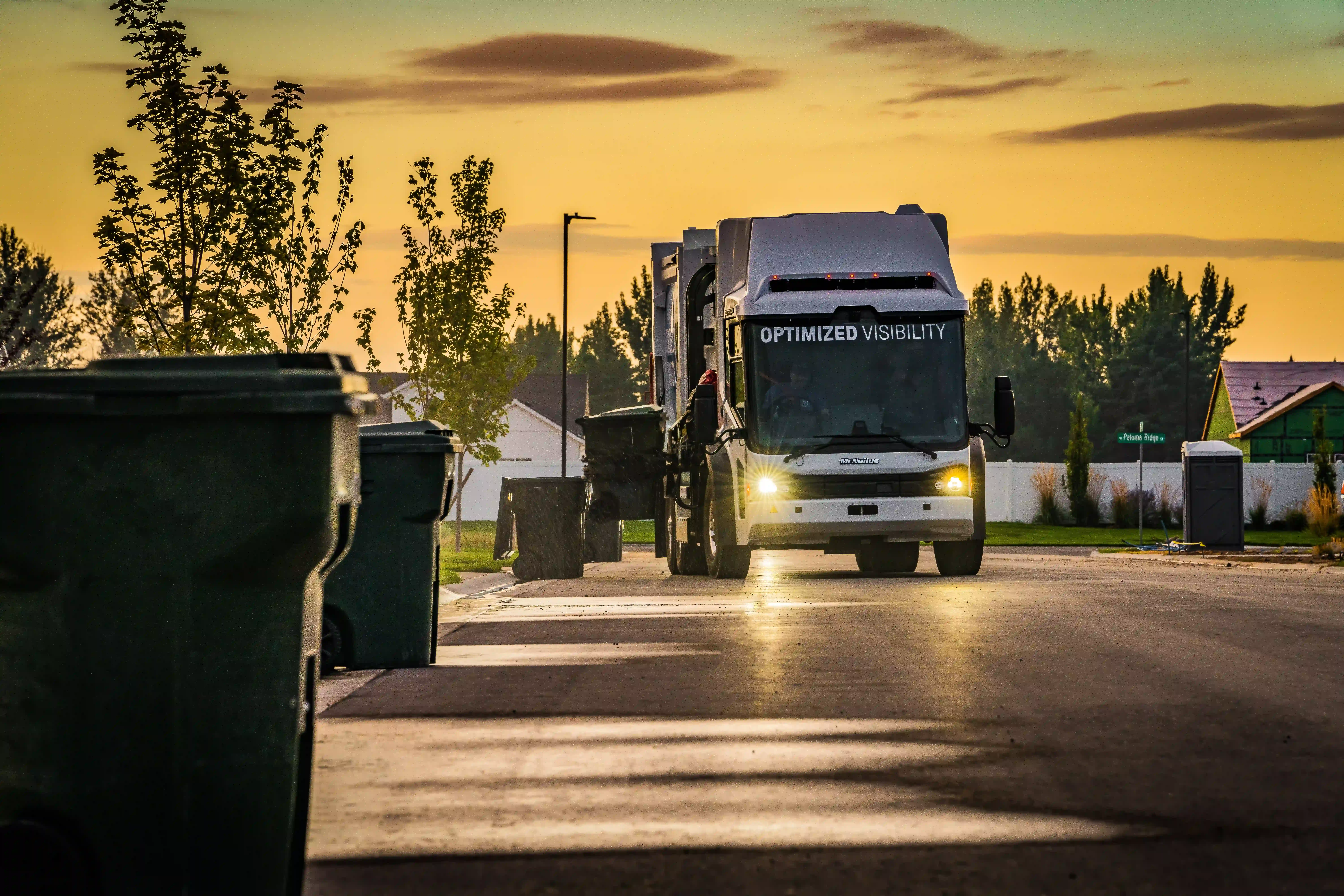
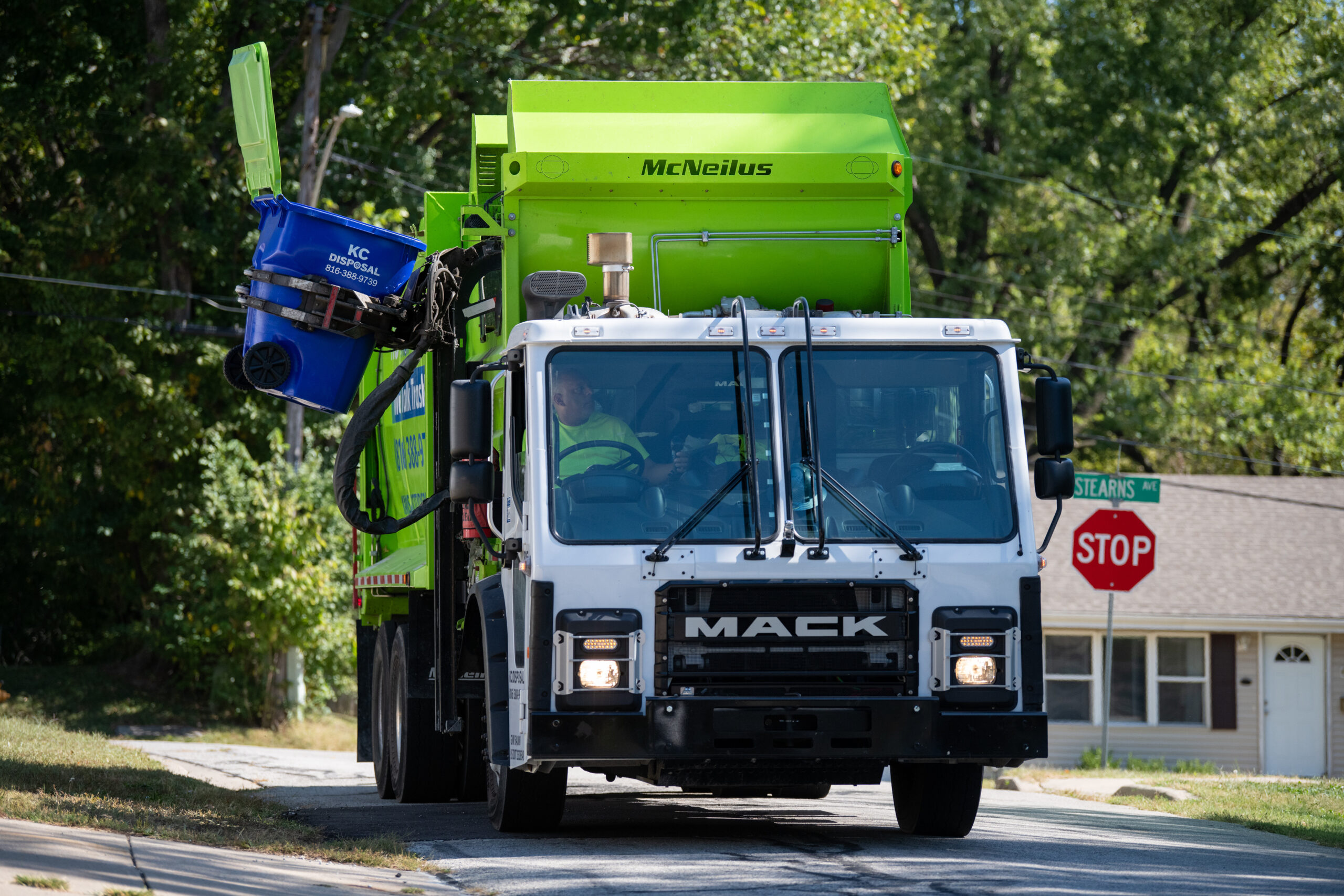
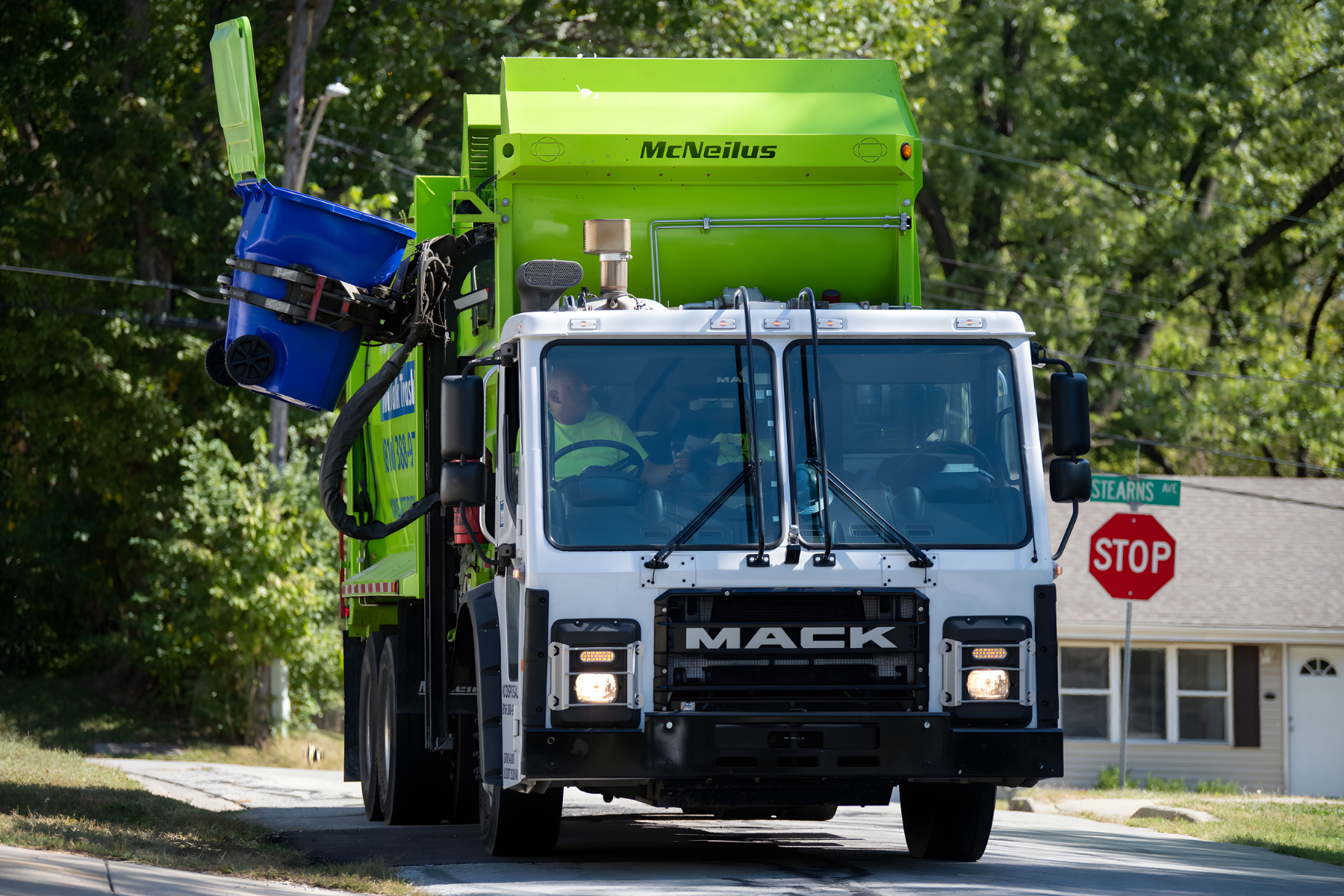
That is where the McNeilus Zero Radius Automated Side Loader stands out as the leader. It was engineered specifically to solve the productivity bottlenecks that traditional side loaders and rear loaders encounter in dense urban settings. Instead of forcing drivers to constantly reposition, back up, or skip blocked carts, the zero radius design allows the truck to maneuver in tight spaces, along smooth stops and creating faster cycle times.
In this article, we’ll break down how this design works and explore exactly why it’s an excellent choice for urban routes.
Tight Urban Routes
Anyone managing city routes knows that in theory the route’s efficiency rarely matches what is needed in the real world. A route that looks clean on paper can quickly fall apart. This is especially true when drivers encounter double-parked vehicles, construction zones, delivery trucks, and narrow corridors with limited turning clearance.
In these environments, traditional side loaders often lose time due to:
- Wide swing requirements for the arm
- Limited reach angles in tight lanes
- Extra repositioning to align with carts
- Increased stop-and-go adjustments
- Slower collection cycles per stop
Every additional second spent adjusting the truck’s position compounds over hundreds or thousands of stops per route. Over the course of a week, that inefficiency translates into overtime hours, increased fuel consumption, and operator frustration which are all perks.
What “Zero Radius” Actually Means
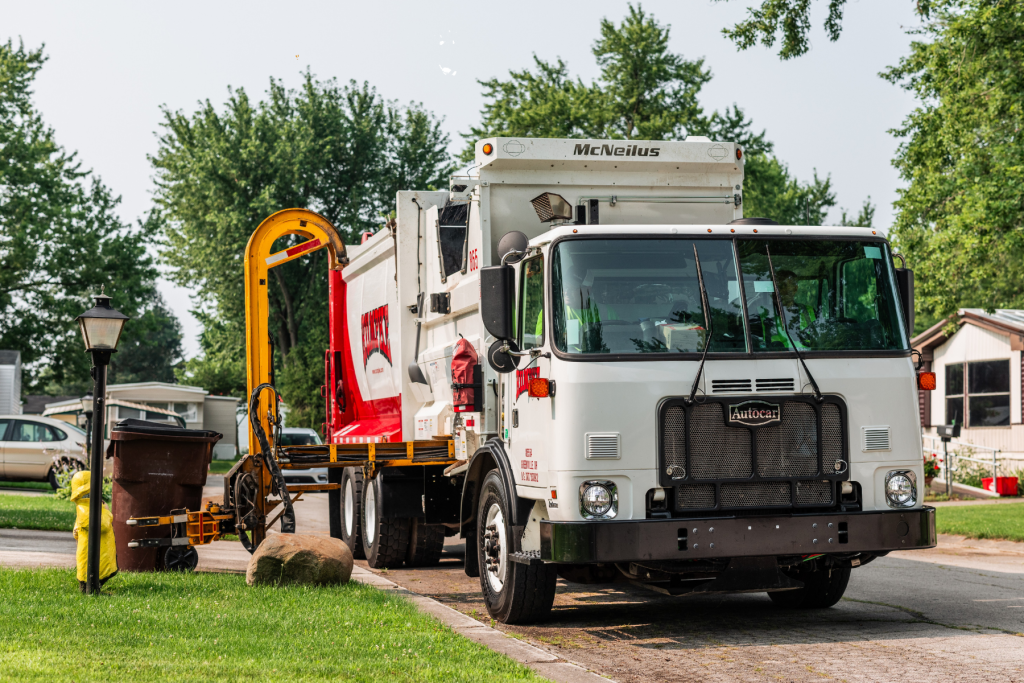
The term “zero radius” is not just marketing language, but reality. It refers to the loader arm’s ability to operate without requiring additional swing space outside the truck’s footprint. On a conventional side loader, the arm typically swings outward in an arc. The swing requires clearance that urban streets simply do not provide for the truck which can create a serious problem.
With a zero radius arm:
- The arm operates closer to the truck body
- Minimal lateral clearance is needed
- Collection can occur in tighter spaces
- Operators do not need perfect cart alignment
This design drastically reduces the need for repositioning the truck for a pick up. Instead of creeping forward, reversing, and re-centering, drivers can maintain a smoother and more consistent route flow that saves time and can be carried out in a limited space area.
Faster Stop-to-Stop Cycle
Productivity in refuse collection is largely measured in seconds per stop so that a company can determine if they are staying ahead financially. When multiplied across hundreds of stops, even small improvements create measurable operational gains that your company should consider as perks.
The zero radius configuration shortens cycle times by allowing the following to take place:
- Quicker arm deployment
- Faster cart grabs in tight placements
- Reduced alignment corrections
- Smoother dumping motions
In dense urban neighborhoods where carts are often placed close to parked cars or tight curbs, the ability to collect without excessive repositioning becomes a major time saver and can even cut down on possible wrecks or other accidents from occurring. Over a full shift, this can translate into dozens of additional completed stops without extending route hours which ends up costing you more money.
Reduced Operator Fatigue and Cognitive Load
Urban routes demand constant attention when driving to maintain safety. Drivers must watch traffic, pedestrians, cyclists, and obstacles while also aligning carts and operating collection mechanisms. Excessive maneuvering adds mental strain and physical fatigue for your drivers who are struggling to carry out their job both efficiently and safely. .
By minimizing the need for repositioning, the McNeilus zero radius system simplifies the operator’s workflow. Instead of constantly correcting truck placement, drivers can:
- Maintain a steady driving rhythm
- Focus on safety and surroundings
- Reduce repetitive steering adjustments
- Experience less end-of-day fatigue
Lower fatigue levels are not just a comfort benefit for your drivers. They directly impact productivity, safety, and retention in a labor market where experienced operators are increasingly difficult to recruit and keep along the way. For the dollar-and-cents view, the ROI of upgrading to automated collection equipment covers this in detail.
Improved Route Consistency in Congested Areas
One of the biggest hidden productivity drains in urban sanitation is inconsistency. A route that takes six hours one day may take eight the next depending on congestion and obstacles.
Zero radius side loaders help standardize your team’s performance when on a route by allowing collection even when:
- Vehicles are parked tightly along curbs
- Carts are slightly misaligned
- Streets are narrower than ideal specifications
- Traffic limits perfect positioning
This consistency makes route planning more reliable. You’ll be able to better forecast your team’s completion times, staffing needs, and fuel usage every step of the way.
Maximizing Efficiency
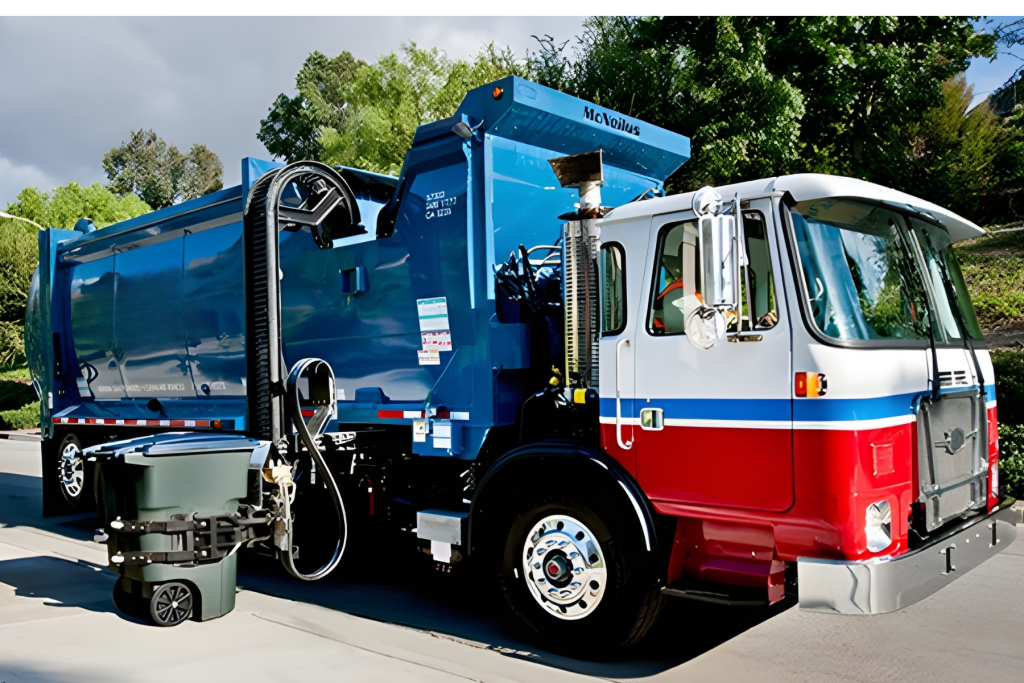
Many older cities rely heavily on alley collection which can be difficult for even the best refuse truck driver. See the full spec sheet on the Zero Radius Automated Side Loader product page. These spaces were never designed for modern refuse vehicles, which creates operational challenges for traditional loaders with wide arm swing requirements.
The zero radius design provides a significant advantage in alley environments because it:
- Requires less lateral clearance
- Navigates tighter turning radiuses
- Collects carts placed close to structures
- Reduces the risk of property contact
For municipalities transitioning from manual or rear loader systems to automated collection, this capability can dramatically improve your team’s alley route efficiency. You can do this all without sacrificing safety.
Fuel Savings Through Reduced Idling and Repositioning
Fuel consumption in refuse fleets is heavily influenced by the driver’s stop frequency, idle time, and repeated maneuvering. When drivers must constantly reposition to align with carts, engines idle longer and fuel usage increases dramatically.
With more efficient cart engagement:
- Trucks spend less time idling
- Routes are completed faster
- Acceleration and braking cycles are reduced
- Overall fuel efficiency improves
Over the lifespan of a refuse truck, even modest fuel savings can result in significant operational cost reductions.
Safer Operation in High-Traffic Urban Corridors
Safety is a major factor in your company’s productivity. Accidents, near-misses, and property damage slow routes and increase liability exposure significantly.
The tighter operational footprint of a zero radius side loader enhances safety by:
- Reducing arm extension into traffic lanes
- Limiting interactions with parked vehicles
- Allowing collection without excessive lane drift
- Improving operator visibility during collection
When trucks can stay more safely contained within their travel lane, the risk of collisions with passing vehicles and cyclists decreases substantially over time.
Compatibility With Modern Automated Collection Programs
Cities moving toward automated cart-based systems require equipment that can maintain efficiency even when cart placement is inconsistent. Residents do not always follow placement guidelines when it comes to putting their cans out. This is especially true in very dense neighborhoods.
The McNeilus zero radius system is well suited for automated programs because it:
- Handles varied cart placement angles
- Performs reliably in high-density housing zones
- Supports standardized collection workflows
- Minimizes missed pickups due to tight spacing
This reliability improves customer satisfaction and reduces the need for costly return trips.
Lower Wear and Tear on Equipment
Frequent repositioning and tight maneuvering place additional stress on steering components, transmissions, and braking systems. Over time, this leads to higher maintenance costs and increased downtime for your crew.
A more efficient collection motion reduces mechanical strain by:
- Limiting excessive steering corrections
- Decreasing stop-and-go stress cycles
- Supporting smoother hydraulic operation
- Reducing unnecessary truck movement
For fleet managers, this translates into longer equipment lifespan and more predictable maintenance schedules which are huge benefits for your business.
Better Performance in Mixed Residential and Commercial Zones
Urban routes often include a mix of single-family homes, multi-unit housing, and small commercial stops in such situations, it is imperative that the refuse truck meet all performance needs.
Zero radius side loaders excel in mixed zones because they can adapt quickly to:
- Narrow residential streets
- Tight commercial loading areas
- Shared access roads
- Densely parked neighborhoods
This flexibility eliminates the need to deploy multiple truck types for different route segments. You’ll be able to completely simplify fleet logistics and operator training.
Productivity Gains That Scale Over Time
The true impact of a zero radius side loader becomes more apparent over months and years of operation. Small time savings per stop compound into measurable long-term gains such as:
- Reduced overtime costs
- Higher route completion rates
- Lower fuel expenditures
- Improved operator retention
- Enhanced service reliability
For municipalities and private haulers operating in growing urban populations, these incremental improvements support scalable and sustainable operations.
Strategic Value for Fleet Modernization
Fleet modernization is not just about replacing aging trucks. Instead, you’re investing in better equipment that aligns with evolving route demands, labor constraints, and urban infrastructure challenges.
Integrating zero radius side loaders into a fleet strategy allows you to enjoy the following:
- Increase route density without adding trucks
- Optimize labor allocation
- Improve safety metrics
- Future-proof operations for urban expansion
This makes them particularly valuable for cities experiencing population growth and increased service demand in compact areas.
Prioritizing Zero Radius Technology
As urban density continues to increase, traditional collection equipment is becoming less practical and even dangerous in some situations. Streets are not getting wider, parking is not decreasing, and service expectations are not slowing down so you need to invest in refuse trucks that are ready for the challenge.
Fleet managers are prioritizing zero radius systems because they directly address the operational realities of modern cities:
- Limited maneuvering space
- Higher stop frequency
- Increased traffic congestion
- Greater safety expectations
- Pressure to reduce operational costs
Equipment that cannot adapt to these conditions quickly becomes a bottleneck and a safety hazard rather than an asset to your company.
Partnering With the Right Equipment Provider
Selecting the right refuse body is only part of the equation. Proper upfitting, service support, and fleet consultation are equally critical to maximizing your productivity gains for your company.
Working with an experienced equipment partner like Ten-8 Industrial ensures that fleets receive guidance on body configuration, chassis pairing, and route optimization strategies tailored to their operational environment. Their expertise in refuse and heavy-duty fleet solutions helps organizations deploy equipment that performs reliably under real-world urban pressures.
Supporting Long-Term Labor Efficiency and Workforce Stability
Labor efficiency is now one of the most critical concerns for municipalities and private haulers alike. Driver shortages, rising labor costs, and increased service expectations are forcing fleets to rethink how equipment can support workforce sustainability. Productivity is no longer just about speed. It is about making routes more manageable for operators over the long term.
Urban routes are physically and mentally demanding and challenging. Constant steering corrections, tight positioning, and repetitive stop-and-go movement can significantly increase operator fatigue. Over time, this leads to slower performance, higher turnover of your staff, and increased training costs for everyone involved.
By minimizing repositioning and simplifying cart engagement, zero radius side loaders create a more ergonomic and predictable workflow. Operators can focus more on safe driving and situational awareness instead of constantly micro-adjusting truck placement.
This shift may sound subtle, but in real-world operations it has a profound impact on your team’s daily performance consistency.
From a fleet management perspective, this contributes to:
- Lower operator fatigue across long urban routes
- Reduced training time for new drivers
- Fewer operational errors in tight collection zones
- Improved retention of experienced operators
Nowadays, the automation efficiency built into modern side loaders allows fleets to maintain high service levels with single-operator configurations. In tight urban corridors where manual collection would slow operations and increase labor requirements, automated zero radius systems preserve productivity while keeping staffing demands stable.
When paired with proper fleet support and deployment strategy from providers like Ten-8 Industrial, these trucks become more than just collection vehicles. They function as long-term operational assets that help fleets scale service without proportionally increasing labor strain.
Over time, that balance between productivity and operator sustainability becomes one of the most valuable advantages in dense urban waste collection programs.
Productivity-Focused Solution for Urban Collection
Tight urban routes will always present operational challenges. However, the right equipment can dramatically reduce inefficiencies that slow down collection and increase costs for drivers.
The McNeilus Zero Radius Side Loader is not just a design innovation that’s trendy. It is a productivity tool engineered for the realities of modern waste collection. By enabling faster cycle times, reducing repositioning, improving safety, and supporting consistent route performance, it provides a measurable advantage if your fleet operates in an urban setting.
For municipalities and private haulers seeking to improve operational efficiency without
Ready to improve productivity on tight urban routes? Connect with the team at Ten-8 Industrial to explore McNeilus Zero Radius Side Loader.