If you manage a refuse operation, you know fuel costs are no joke and can seriously impact your business. They’re one of the biggest line items in your budget, and they never seem to go down. With fluctuating diesel prices, stricter emissions standards, and increasing pressure to operate efficiently, it’s no surprise that fleet managers are constantly trying to find new ways to cut costs without cutting corners.
Here’s the good news: you don’t need to overhaul your entire operation or buy a fleet of electric trucks to see real savings. With a few smart changes and a bit of strategy, you can start reducing fuel expenses almost immediately.
In this article, we’re not going to just toss out generic advice like “buy more efficient trucks.” That’s not always realistic, and we know it (and so do). Instead, we’re going to give you practical, usable info that works with the fleet you’ve already got. Yep, we will offer real-world tactics that can actually make a difference on your fuel bill.
The Silent Killer: Idling
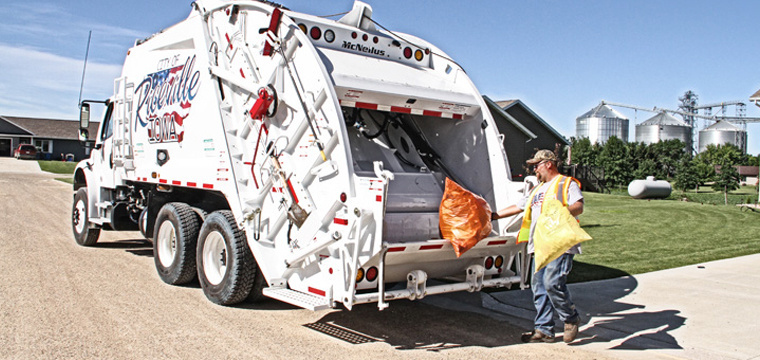
Let’s start with one of the biggest and often most overlooked fuel wasters, idling. It happens more than you think. Drivers stop to chat with a homeowner, wait in traffic, or eat lunch without shutting down the engine. While it might not seem like a big deal, it adds up fast in costs.
A truck that idles for just one hour can burn almost a gallon of fuel. Multiply that by every truck in your fleet, every day, and you’ve got a real and very costly problem on your hands.
You can’t completely eliminate idling. Some idling is inevitable, especially during compaction cycles, but you can minimize it.
Start by educating your drivers. Most people don’t realize how much fuel is being burned just sitting still.
Pair that with incentives for low-idle times and automated engine shut-off systems where possible.
Even shaving off 15–20% of idle time across your operation can mean thousands of dollars saved each month.
Route Planning: Efficiency is Everything
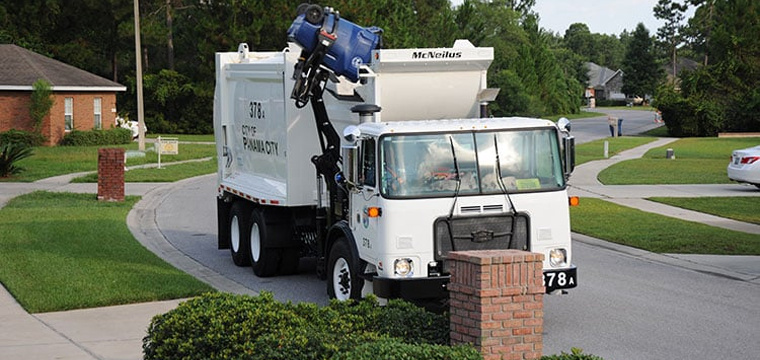
You wouldn’t take the long way home just for fun if gas were $6 a gallon. So why should your trucks take unnecessary or longer routes?
Good route planning is the key to savings. It’s not flashy, but it works. The key is optimizing routes to reduce miles driven, minimize left turns (yes, really), and reduce backtracking. Shorter, smarter routes mean less fuel burned, less wear on your trucks, and more time for your drivers to complete their day without going into expensive overtime.
You might already have some form of route planning in place, but when’s the last time you took a hard look at it? Customer growth, construction detours, and seasonal traffic changes can all quietly throw your routes out of whack.
It’s worth doing a quarterly review of your collection maps. Better yet, consider GPS-based route optimization software that adjusts routes in real-time and flags inefficiencies. If you’re managing more than a handful of trucks, this kind of tech pays for itself fast.
The Driver Makes a Difference
You could have your drivers driving the most efficient route in the world and still burn too much fuel if your drivers are heavy on the throttle and light on the brakes. Driver behavior plays a huge role in fuel efficiency.
Let’s be honest, some drivers treat their trucks like they’re in a demolition derby. Rapid acceleration, slamming on brakes, coasting downhill in neutral (yep, it still happens). All of that eats away at your fuel mileage and shortens the life of your vehicle components.
Training helps, but feedback is even better. If your trucks have telematics or onboard diagnostics, you can track driver habits in real time. For a deeper look at this topic, the role of telematics in managing a refuse fleet covers this in detail.
Show your drivers their stats, set benchmarks, and reward improvement if your driver makes strides to improve. Most people will adjust their habits when they see how they compare to their peers, especially if there’s a reward tied to better performance.
Proper Maintenance Keeps You Efficient
Here’s a common scenario: a truck starts to feel sluggish. Fuel mileage dips a little. Your driver might notice that the engine runs a bit louder. However, even with the extra noise, it’s still doing its job, so you let it ride. However, it’s a ticking time bomb because one day it breaks down, and you’re suddenly paying for both a tow and a turbo replacement.
While you have been waiting to see what happens, the truck’s poor performance is increasing your fleet’s fuel use, which costs you money.
Keeping your trucks well-maintained is one of the easiest ways to protect your fuel budget. Things like dirty air filters, underinflated tires, bad injectors, or misaligned wheels can all quietly drag down fuel economy. Preventive maintenance doesn’t just prevent breakdown. It also keeps your engines running at peak efficiency.
You need to create a schedule and stick to it. Take the time to log every oil change, every tire rotation, every minor repair. The more data you collect, the more proactive you can be. Remember, don’t rely solely on drivers to report issues. Mechanics often spot fuel-wasting problems long before a driver does.
Spec the Right Truck for the Job
Let’s talk about truck bodies and chassis. It’s easy to think a bigger, heavier truck is automatically better. If your routes don’t justify that extra size or compaction capacity, you’re just wasting fuel hauling around extra steel.
Rear loaders, front loaders, and side loaders all have their place, but not all are ideal for every job. Think about it, if you’re servicing residential neighborhoods with tight cul-de-sacs, a rear loader with a smaller footprint might be more fuel-efficient than a bulky front loader designed for commercial bins.
Over-spec’ing your equipment is like driving a semi to the corner store. It works, but it’s not the most fuel-efficient choice.
Ideally, you should review your route data, average pickup volumes, and road conditions to make sure your truck bodies match the demands of the job. Sometimes downsizing, strategically, can lead to big savings over time, which can definitely help your business in the long run.
Alternative Fuels
Many people are exploring alternative fuels, natural gas, biodiesel, and even electric refuse trucks, to reduce fuel use. Yes, they can lower your fuel costs and reduce emissions, but they’re not a silver bullet. They come with their own sets of costs, learning curves, and infrastructure challenges.
It’s always smart to keep an eye on the future. One thing to consider is that pilot programs might be a great way to test the waters. If you operate in an area where CNG infrastructure is already available, it might make sense to convert a portion of your fleet, but you’ll need to weigh the pros and cons.
Avoid feeling the pressure to change. For a deeper look at this topic, our guide on electric refuse trucks covers this in detail. Instead, stick to the strategies that work for your operation today. You can always build toward alternatives as the technology and incentives become more accessible.
Fuel Management Is a Strategy, Not a Guess
Let’s say two of your trucks fill up at the same gas station every week, using the same fuel card. But one of them burns through a tank almost twice as fast. If you’re not tracking fuel usage closely, that red flag might go unnoticed for months.
Fuel management systems can take the guesswork out of tracking who’s burning what, and when. These tools can give you detailed reports by vehicle, driver, route, or even time of day. Over time, you’ll spot patterns, outliers, and potential fraud.
Even without high-end software, you can start with something as simple as tracking miles-per-gallon manually across your fleet. Look for trucks or drivers with unusually high fuel usage, then investigate. Sometimes it’s a mechanical issue. Other times, it’s a behavioral one. Either way, knowledge is power.
The Culture Shift That Pays Dividends
At the end of the day, reducing fuel costs in refuse operations isn’t about one big fix. It’s a mindset shift. When your whole team, from management to mechanics to drivers, understands that fuel is a controllable cost, they start to see opportunities for improvement everywhere.
Celebrate the wins, no matter how small. If a driver cuts idle time by 20%, give them a shout-out. If a new route cuts 10 miles off the daily loop, let everyone know.
Even small changes, when repeated across dozens of trucks and hundreds of days, create real, lasting savings.
Fuel efficiency isn’t just about cutting costs. It also means fewer emissions, less engine wear, and better overall performance. That’s a win for everyone, such as your bottom line, your community, and your crew.
No one’s pretending that fuel costs will suddenly drop tomorrow. But that doesn’t mean you’re powerless when it comes to reducing fuel costs. With smart route planning, engaged drivers, proper maintenance, and a little bit of technology, you can start slashing unnecessary fuel expenses right away and reap the benefits.
Start small. Pick one or two strategies that make the most sense for your operation and build from there. You don’t need to be perfect; you just need to start focusing on reducing fuel costs for your fleet.
At Ten-8 Fire & Safety, we work with public works departments, private haulers, and municipalities across the country to build stronger, more efficient operations.
Ready to talk strategy or explore refuse trucks for sale that match your efficiency goals? Contact Ten-8 Fire & Safety today.